The Pinglu Canal officially opened to navigation on September 16, connecting inland waterways in Guangxi with the northern Gulf and providing a new shipping route between southwestern China and international markets.

Figure 1: Madao Hub of Pinglu Canal in operation.
Stretching 134.2 km, the canal was built to Class I inland waterway standards and accommodates vessels of up to 5,000 tons. Among its most demanding engineering systems are the hydraulic ship locks, where large valves must operate rapidly while decelerating smoothly and reliably at the end of each cycle.
To address a critical cushioning challenge in this system, a research team led by Professor Yun Chen of Wuhan University of Technology turned to metal additive manufacturing. In a first-of-its-kind application for water infrastructure, the team used Farsoon metal additive manufacturing to produce a labyrinth-type cushioning sleeve for the ship-lock hydraulic cylinders.
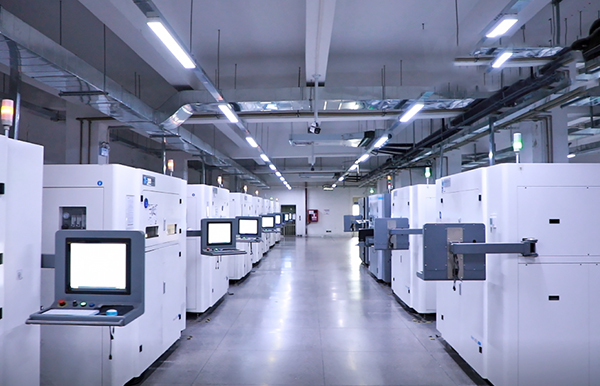
Two sleeve configurations were manufactured on a four-laser Farsoon FS350M, with each design produced as a single integrated component. The technology successfully passed acceptance testing in 2025 and has provided a new manufacturing approach for a highly demanding hydraulic application.
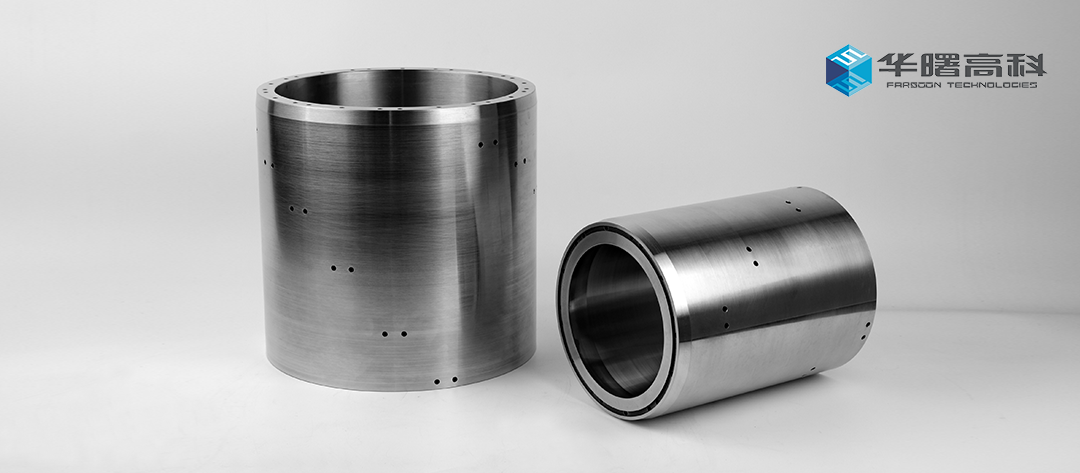
Figure 2: labyrinth-type cushioning sleeves produced by Farsoon FS350M. Image by Farsoon.
A Complex Flow Path: Challenge for Conventional Manufacturing
The Pinglu Canal’s first major hub, the Madao Hub, features one of the most demanding inland ship-lock systems in the world. Its 29.6-meter natural water head places significant demands on the hydraulic system.
Each 70-ton valve must open in approximately one minute and close in around 30 seconds. At the end of the closing cycle, the valve must decelerate smoothly over its final 280 mm of travel to prevent excessive impact and mechanical wear.
This created a challenge for the hydraulic-cylinder cushioning system. Conventional cushioning designs rely heavily on the precise clearance between the cushioning sleeve and ring. Manufacturing and assembly tolerances can affect the resulting hydraulic behavior, often requiring additional adjustment and commissioning.
The engineering team developed a labyrinth-type cushioning sleeve to provide more precise control of hydraulic flow during deceleration. Its intricate internal passages create a carefully controlled flow path that regulates the hydraulic oil as the valve approaches the end of its stroke.
However, the challenge was manufacturing the geometry itself. The internal labyrinth structure is highly complex and cannot be produced as a single integrated component using conventional machining, casting, or forging.
Metal AM Turns a Complex Design into a Single Component
Metal additive manufacturing provided a direct solution to the manufacturing challenge. Using the Farsoon FS350M, the team produced the complex internal flow channels in the cushioning sleeve, with no need of assembly multiple components to create the labyrinth structure.
Advantages for the application:
Integrated construction
The complete flow channel structure could be manufactured as a single component, eliminating joints between separately manufactured sections and helping maintain the intended hydraulic performance.
Simplified assembly
The precision of the printed geometry reduced the sensitivity of the cushioning system to assembly clearances, helping minimize the repeated adjustments traditionally associated with conventional designs.
Greater design freedom
The ability to manufacture complex internal channels opened up design options that were not practical with conventional manufacturing methods.
Production efficiency
A complex functional component could be manufactured directly from the digital design, shorten the development and production cycle for a critical infrastructure application.
Validated results
The performance of the AM cushioning sleeve was demonstrated in the ship-lock hydraulic system.
The engineered labyrinth channels regulate hydraulic-oil flow as the valve approaches the end of its stroke, enabling the system to combine rapid valve movement with controlled final-stage deceleration.
The 70-ton valve can therefore operate at high speed while achieving a smooth “soft stop” during the final 280 mm of travel.
The cushioning effect is generated mechanically within the hydraulic cylinder, without additional hydraulic control or variable-frequency motor control. This helps reduce impact loads and associated mechanical wear while supporting reliable long-term operation of the ship-lock system.
The technology completed formal acceptance testing in 2025, validating the AM-produced cushioning sleeve for its intended application.
The Pinglu Canal project illustrates a broader opportunity for metal additive manufacturing: solve engineering problems that are difficult to address with conventional manufacturing, with greater freedom to optimize flow control, performance, assembly, and component integration.
For infrastructure and industrial equipment manufacturers, this can open new possibilities for components where internal geometry is critical—from hydraulic systems and valves to pumps, heat exchangers, and other fluid-management equipment.