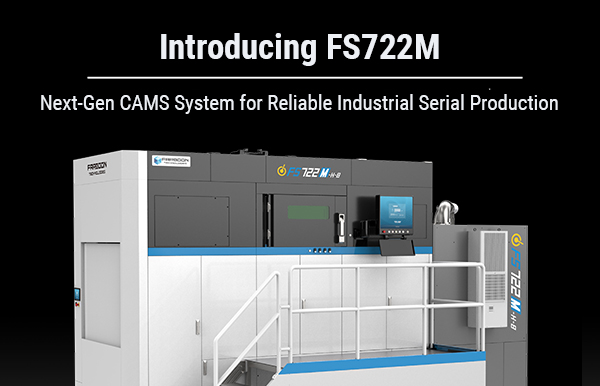
The next generation of the HT1001P and Flight HT1001P-H platforms brings customer-driven development to large-format series production
Farsoon Technologies introduces the Flight HT1002P-CAMS, the next generation of its 1001 and 1001-H platforms for large-format polymer powder bed fusion (PBF). Developed through listening to series-production customers and building on experience with these established platforms, the HT1002P continues Farsoon’s focus on reliable operation, higher productivity and practical production economics.
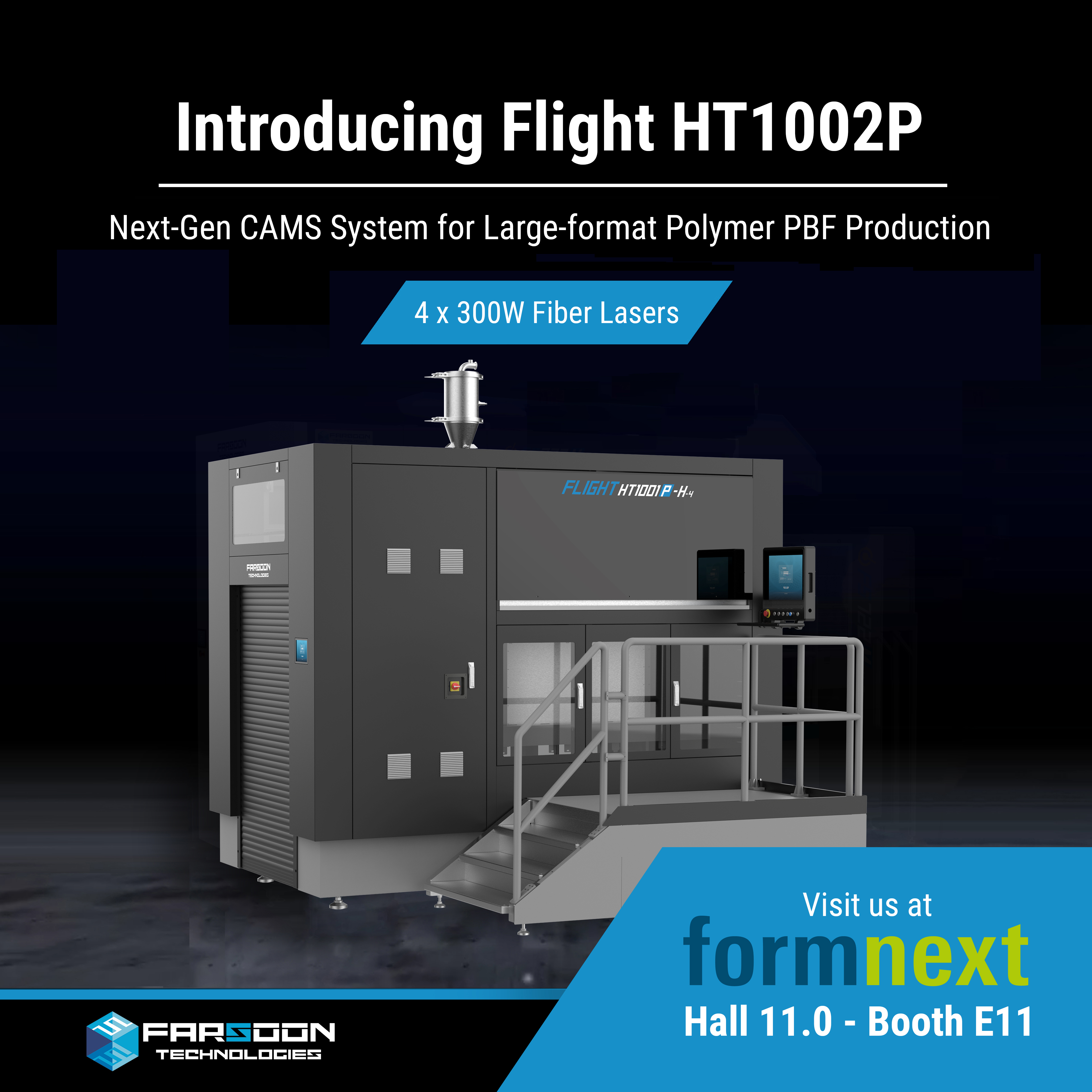
The platform combines a 325-liter build volume, four 300 W fiber lasers and advanced thermal management with a modular Continuous Additive Manufacturing Solution (CAMS) concept. Its development addresses the complete production cycle, with the aim of increasing equipment utilization and supporting repeatable industrial part production.
Large-Format Capacity for Greater Production Flexibility
With a build envelope of 1,000 × 500 × 650 mm (325 liters), the Flight HT1002P-CAMS provides the capacity to produce long, single-piece components as well as high-yield production batches. The 1-meter build axis accommodates elongated geometries commonly found in automotive ducts, interior trim, and industrial components, while the 650 mm build height provides additional flexibility for tall parts and optimized nesting, helping customers make better use of each build.
For series-production applications, this capacity provides scope to increase parts per batch and consolidate components where design and qualification requirements allow.
Multi-Laser Performance with Flexible Production Modes
The Flight HT1002P-CAMS is equipped with four 300 W fiber lasers, delivering scanning speeds of up to 20 m/s. This multi-laser configuration is designed to significantly increase productivity compared with conventional CO₂-based polymer SLS platforms.
To accommodate different production priorities, the system offers two operating modes. Production Mode utilizes overlapping multi-laser scanning fields to maximize build speed and production output. Premium Mode assigns dedicated single-laser scanning within a 335 × 550 mm working zone, providing greater process control for applications with demanding quality and certification requirements.
This flexibility enables manufacturers to balance production throughput and part quality according to specific application needs.
Thermal Control for Repeatable Builds
The Flight HT1002P-CAMS has a stated maximum chamber temperature of 220 °C. An upgraded multi-zone heating architecture and real-time infrared thermal monitoring support temperature consistency across the build bed. Dynamic process adjustments and dedicated cooling for optical assemblies further support thermal stability.
These features are designed to improve process consistency across large-format builds and successive production cycles. Material selection and operating temperatures must follow a validated process for the specific polymer grade and application.
Modular CAMS Workflow for Better Utilization
A major advancement of the Flight HT1002P-CAMS is its modular CAMS architecture, designed to adapt to different factory layouts and production requirements.
An automated bidirectional conveyor system handles build cartridge loading and extraction through electronic doors on both sides of the build station. Preheating, building, cooling, and breakout stations can be configured independently to create a streamlined production workflow.
Manufacturers can position multiple preheating and cooling units alongside the printer or integrate them into centralized production cells using Automated Guided Vehicles (AGVs) or robotic arms system. Combined with exchangeable build cartridges, this flexible configuration allows build preparation, cooling, and part removal to take place alongside ongoing printing operations, reducing idle time and supporting continuous production.
Further automation concepts include automatic laser window changers, closed-loop powder supply and recycling, Manufacturing Execution System (MES) integration and remote monitoring. The scope of these functions depends on the released system configuration and the customer’s integration project
Customer experience translated into production value
The HT1002P’s development builds on the 1001 and 1001-H platforms and on feedback from customers operating polymer AM in series production. Farsoon’s continuous improvement approach connects machine development with the practical requirements of daily manufacturing: stable processes, efficient material handling and productive use of installed equipment.
Multi-laser printing addresses build productivity, while the modular workflow is intended to reduce non-printing time. Together, they provide a basis for improving output per machine and production economics. Actual savings and cost per qualified part depend on material utilization, build loading, operating conditions and the validated workflow.
By advancing both the printing process and the surrounding production workflow, Farsoon aims to help manufacturers scale polymer additive manufacturing with greater process consistency and more efficient factory operations.
Meet Farsoon Europe at Formnext 2026
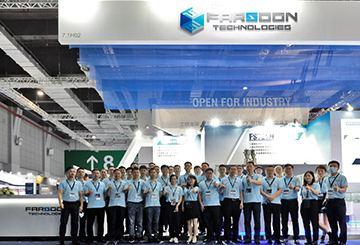
Discover the new Flight HT1002P-CAMS and explore Farsoon’s latest innovations in industrial polymer additive manufacturing. Visit Farsoon Europe at Formnext 2026 – Hall 11.0, Booth E11 to discuss how Farsoon’s scalable polymer AM and automation solutions can support your next stage of production growth. Contact wehelpyou@farsoon-eu.com for more information.